3 Nov 2026
How Platform Standards Shape Content Flow Over Successive Development Phases
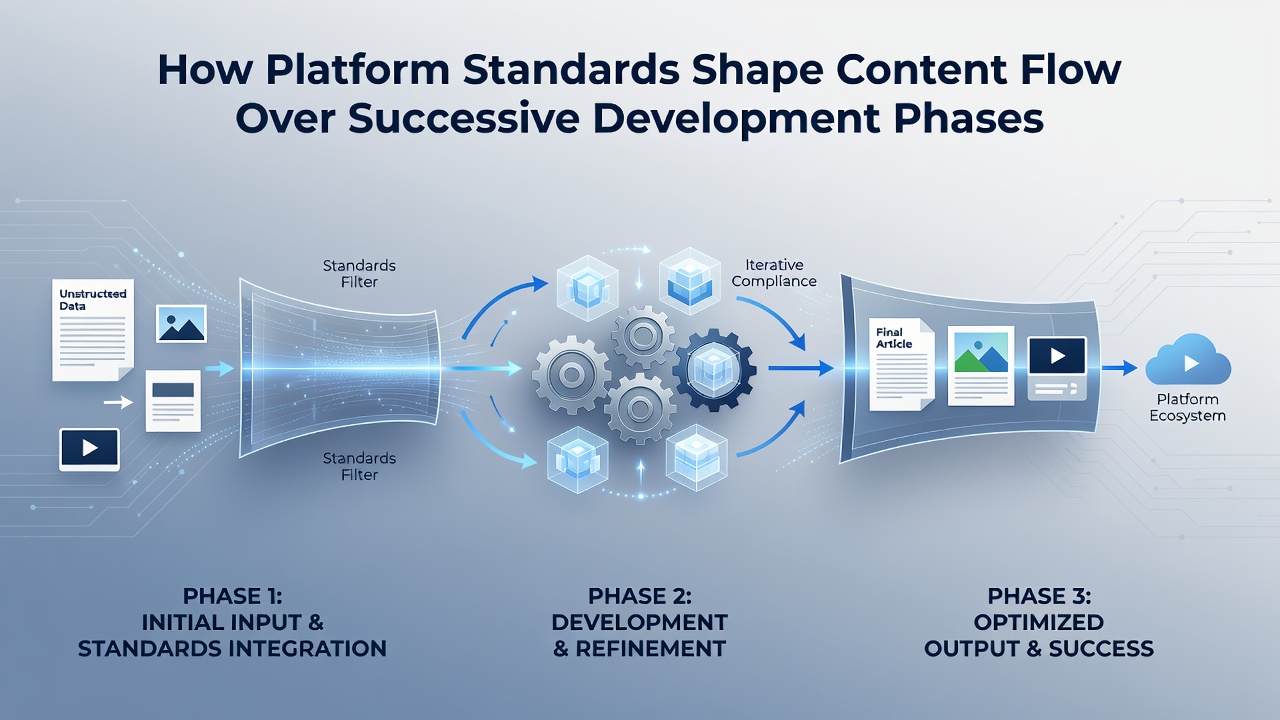
Platform standards emerge as structured guidelines that govern data exchange, user interactions, and content moderation across digital ecosystems, and these rules evolve in distinct phases as platforms mature from initial launch through expansion and eventual stabilization. Early phases typically focus on establishing basic interoperability protocols, whereas later stages introduce layered compliance mechanisms that redirect how information moves between creators, algorithms, and end users.
Initial Launch and Foundational Protocols
During the first development phase, organizations prioritize core technical specifications such as API endpoints and basic metadata requirements, which establish the initial pathways for content to enter the system. Research from the World Wide Web Consortium shows that these early standards emphasize compatibility with existing web infrastructure, allowing developers to integrate upload functions and basic discovery tools without extensive custom coding. Content flow at this stage remains relatively open, with minimal filtering layers because the priority rests on attracting initial users and testing core functionalities.
Standards bodies coordinate with platform teams to define data formats and security baselines, and this collaboration produces consistent rules that prevent fragmentation across devices. Observers note that platforms often release public documentation outlining these requirements, which in turn shapes how third-party tools connect and contribute material during the beta period. The result is a streamlined pipeline where raw uploads move directly into indexing processes before any sophisticated ranking systems activate.
Expansion Phase and Layered Compliance
As platforms scale, regulatory and technical standards accumulate additional requirements around accessibility, data privacy, and regional content restrictions. In November 2026, several major operating systems plan to enforce updated accessibility mandates that will require platforms to embed real-time captioning and alternative text generation directly into upload workflows. These changes alter content flow by inserting automated processing steps earlier in the pipeline, which reduces the volume of material that reaches public feeds without modification.
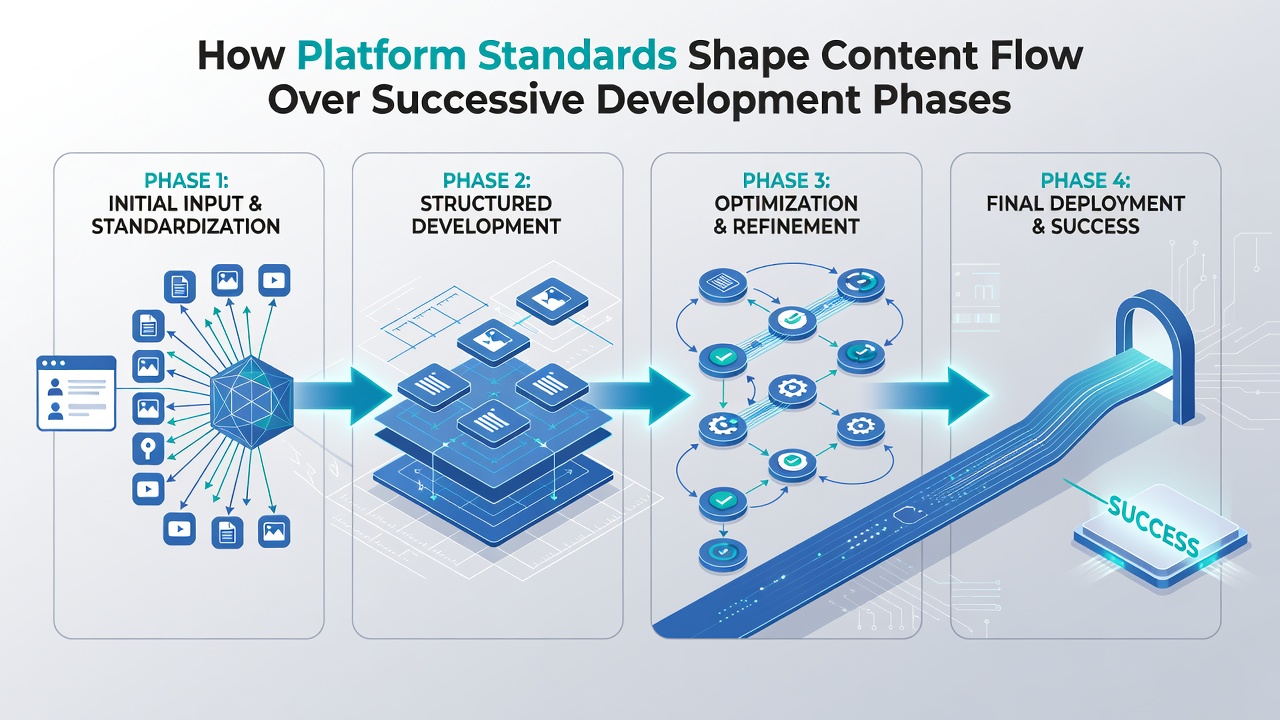
Industry reports from the European Commission indicate that digital service regulations prompt platforms to implement graduated moderation tiers once user bases exceed defined thresholds. Content creators encounter new metadata fields for geographic tagging and age classification, which redirect material into separate distribution channels depending on compliance status. Researchers at Australian universities have documented similar patterns where eSafety guidelines force platforms to reroute flagged items through review queues before algorithmic amplification occurs.
Maturity Phase and Ecosystem Integration
Mature platforms integrate standards from multiple sources including trade associations and academic research institutions, which produces complex routing logic that balances commercial objectives with external oversight. Data from the National Institute of Standards and Technology reveals that established platforms adopt versioned protocol updates on annual cycles, each iteration adding validation checks that influence how long content remains visible and how widely it circulates. Those who maintain large archives often discover that older material must be reprocessed to meet revised schema requirements, creating temporary bottlenecks in retrieval systems.
Platform operators coordinate with device manufacturers to align rendering standards, and this alignment affects visual and audio quality parameters that creators must satisfy to maintain visibility in recommendation engines. Studies conducted across North American research centers show that these cumulative standards gradually shift control over content pacing from individual upload decisions toward automated compliance engines. The cumulative effect channels material through narrower gateways as platforms reach operational stability.
Conclusion
Platform standards therefore function as evolving filters that progressively reshape content pathways from initial openness through structured distribution and finally into regulated equilibrium. Successive development phases introduce new constraints and validation layers that collectively determine the speed, reach, and form in which material travels across digital networks.